Physical Address
304 North Cardinal St.
Dorchester Center, MA 02124
Physical Address
304 North Cardinal St.
Dorchester Center, MA 02124
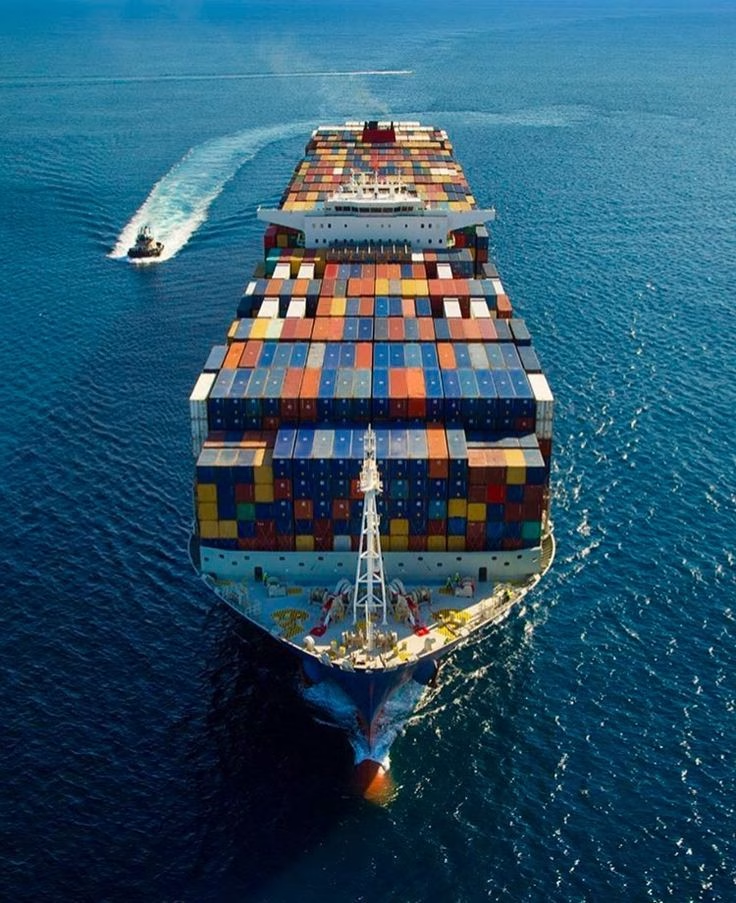
In Nigeria’s fast-growing trade and logistics sector, millions of naira worth of goods move daily across seas, roads, and airways.
But what happens if your cargo gets damaged, stolen, delayed, or lost at sea?
That’s where Marine Insurance comes in.
Marine insurance ensures that importers, exporters, and logistics businesses don’t lose money when accidents or disasters strike during transit.
Whether you’re shipping from China, Dubai, or Lagos to Onitsha, this policy protects your goods — and your profits.
It is a policy that provides financial protection against the loss or damage of goods and cargo while being transported over water, air, or land.
It covers risks like:
—Shipwreck or sinking
—Piracy and theft
—Storms or bad weather
—Fire or explosion
—Collision or grounding
—Damage during loading/unloading
In Nigeria, marine insurance isn’t just for big importers — even small business owners running mini-importation or local transport can benefit from it.
ALSO READ; Top Insurance Policies you must consider in 2026
Nigeria imports billions of dollars worth of goods yearly — electronics, cars, machinery, clothing, and raw materials.
But the journey from the port to the warehouse is full of risks.
Here’s why it is crucial:
—It Protects your goods from unpredictable losses.
—It Ensures you recover financially after accidents or theft.
—It Builds trust with suppliers and customers.
—It Required by many banks and customs for trade financing.
—In short, it’s the smartest way to safeguard your import or export business in 2026.
Marine insurance isn’t “one-size-fits-all.” There are different types of policies depending on what you’re transporting and how.
Here’s a breakdown 👇
This is the most popular type of marine insurance.
It covers the goods being transported — from when they leave the warehouse until they reach the final destination.
Examples of risks covered:
—Fire or explosion on ship
—Theft or loss of cargo
—Damage from seawater or storms
—Handling and loading accidents
Ideal for: Importers, exporters, freight forwarders, and e-commerce businesses.
Covers the vessel or ship itself — including its machinery, equipment, and tools.
Example: If a ship collides, sinks, or gets damaged in a storm, the shipowner is compensated for repair or replacement.
Ideal for: Shipowners, vessel operators, and marine transport companies.
ALSO READ; How to Secure a lifetime income after retirement
This policy protects shipowners or cargo handlers against legal liability for damages or losses caused to third parties.
Example: If your ship damages another vessel or cargo, liability insurance pays for the compensation.
Ideal for: Shipping companies, port operators, and logistics agents.
This covers the loss of freight income if the cargo is lost or damaged before delivery.
Example: If a ship carrying goods sinks and you lose expected freight payment, this policy compensates you.
Ideal for: Shipping agents, freight forwarders, and logistics companies.
Covers goods while being transported by land within Nigeria — from port to warehouse, or between cities.
Example: If a truck carrying your imported goods from Apapa to Ibadan gets into an accident, your insurer pays for the loss.
Ideal for: Importers, distributors, and manufacturers.
1. Proposal & Valuation: You declare details about the goods, value, and route.
2. Policy Agreement: The insurer assesses the risk and issues a marine insurance certificate.
3. Premium Payment: You pay a percentage (often between 0.5% – 2% of cargo value).
4. Shipment & Coverage: Goods are covered during transport until delivery.
5. Claims Process: If damage or loss occurs, you submit evidence, and the insurer compensates you.
To process a claim, you’ll typically need:
—Original marine insurance policy certificate
ALSO READ; Top ten investment opportunities in Nigeria for 2026
—Bill of lading or airway bill
—Commercial invoice and packing list
—Survey report or damage certificate
—Claim form and correspondence evidence
For importers and exporters, marine insurance isn’t just about protection — it’s a business requirement.
When doing international trade under Incoterms (like CIF or FOB), marine insurance determines who bears the cost and risk of loss.
Under CIF (Cost, Insurance & Freight) — the seller must insure goods.
Under FOB (Free on Board) — the buyer must insure the goods after loading.
Failing to insure goods can lead to total financial loss during transit.
Cargo Type—Average Premium Rate—Coverage Duration
—General Goods 0.5% – 1.0% Single Voyage
—Fragile Items 1.5% – 2.0% Single Voyage
—Machinery/Equipment 1.0% – 1.5% 30–60 days
—Bulk Cargo (Oil, Gas, Grains) 0.8% – 1.2% Voyage Period
Rates depend on cargo type, route, destination, and risk exposure.
Legal Framework for Marine Insurance in Nigeria
Marine Insurance in Nigeria is governed by:
—Marine Insurance Act of 1961 (as amended)
—Nigerian Insurance Act of 2003
—Regulations by NAICOM (National Insurance Commission)
These laws ensure fair practice, protect policyholders, and make marine insurance enforceable in Nigerian courts.
ALSO READ; Leading Insurance Companies Offering Marine Insurance
—Protects cargo against loss, theft, or damage
—Reduces business risk and financial exposure
—Builds trust with global partners and suppliers
—Ensures continuity in trade and logistics
—Legally supports claims in case of maritime loss
In today’s unpredictable global trade environment, marine insurance isn’t just an option — it’s a lifeline.
Whether you’re a small importer or a large exporter, insuring your goods protects your business from devastating losses.
Before your next shipment leaves the port, make sure it’s covered.
Because when it comes to shipping, it’s better to be safe than sorry.






It’s fascinating how quickly online gaming is evolving! The integration of blockchain & AI, like with nino gaming casino com, promises a new level of trust & personalization. Quick registration via mobile is a smart move for the Philippine market, too!